
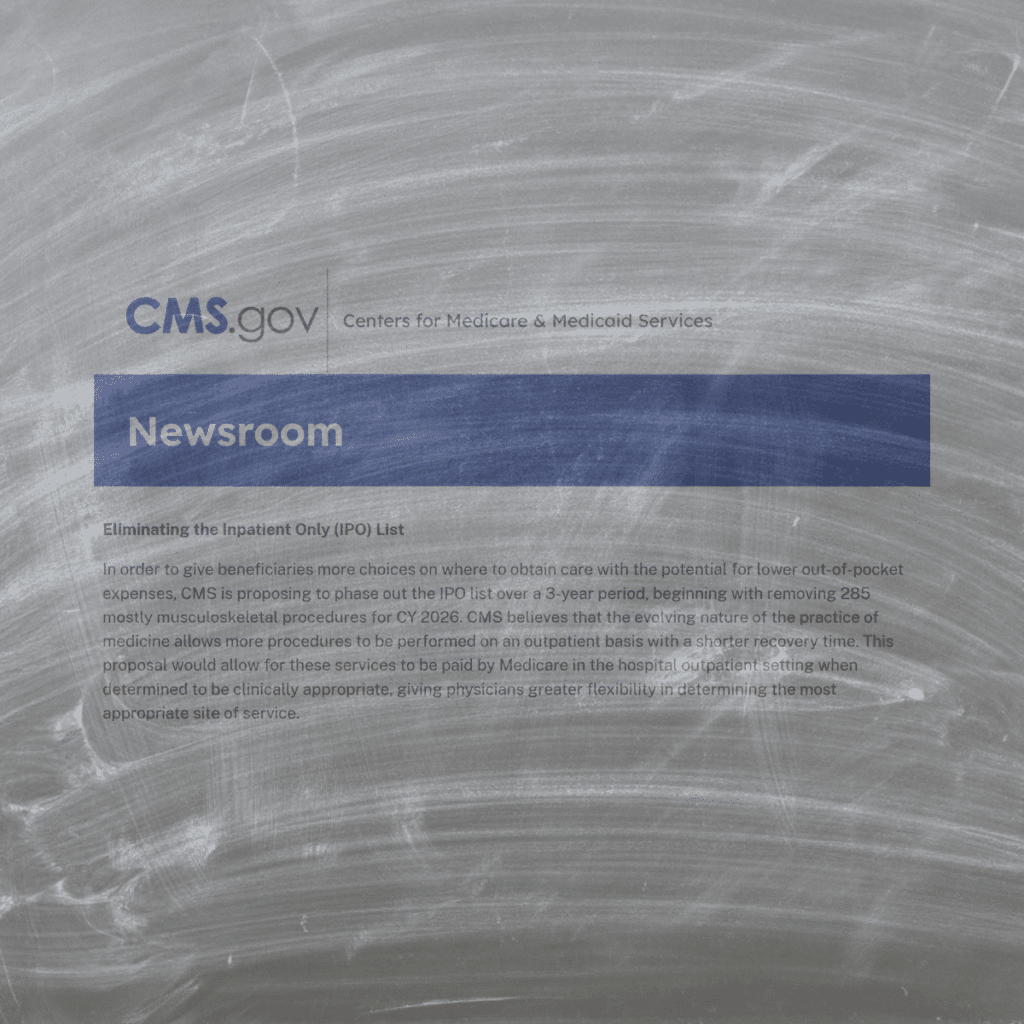
The Centers for Medicare & Medicaid Services (CMS) began dismantling the Inpatient Only (IPO) list on January 1, 2026, by removing 285 musculoskeletal, orthopedic and spine procedures. This phasing out process will happen over the next three years1, allowing more procedures to be performed on an outpatient basis, which CMS believes will result in a shorter recovery period.
The elimination of the IPO list aims to give physicians more options on where to perform surgical procedures, while also allowing patients more choices. This move represents a shift from a procedure-based requirement to one of clinical judgment, so not all patients will benefit from the expanded surgical locations. When identifying the procedure setting, the physician will assess the patient’s specific needs, anticipated recovery and comorbidities.
CMS created the IPO list more than 20 years ago to direct the level of care (LOC) for procedures that it deemed as only safe to perform in an inpatient setting. Since then, procedures have been added or removed from the list annually based on recommendations from the American Medical Association (AMA) and public comment. In 2021, CMS considered eliminating the list altogether but ultimately did not due to safety concerns raised during the COVID-19 public health emergency. Stakeholders also voiced additional concern around the financial strain that hospitals were experiencing at this time.
Patient Safety
Patient safety remains a primary concern around the elimination of the list, as the IPO list was intended for high-risk procedures that needed to be performed in a setting with 24-hour monitoring. The dismantling of the list may lead to high-risk medical patients receiving care in facilities that are not equipped to address their clinical needs. Further, admission into a skilled nursing care facility post procedure, covered by Medicare Part A, generally requires a three-day inpatient hospital stay. Some patients may face an unexpected discharge requiring skilled nursing post-surgery; however, procedures performed in an outpatient setting will not meet this admission requirement.
The phasing out of the IPO list may lead to more work for hospitals and health systems, as procedures that once held the IPO designation will now need to be carefully reviewed before determining the most appropriate LOC. These procedures that once held this designation will now be evaluated under the Two-Midnight rule, making medical necessity documentation critical. From a reimbursement perspective, these cases will no longer benefit from clear billing, and there is the concern that this phasing out will be misinterpreted by the Medicare Advantage organizations (MAOs). The lack of clear guidelines around this transition represents an operational and financial challenge, as well as a compliance risk. Without the IPO list protection, hospitals can expect to see increased audits on these causes, making medical necessity decisions and clinical documentation integrity a must.
Summary
Hospitals and health systems now need to prepare their teams to understand the details of the changes beyond the procedures removed from the IPO list. Each case is unique and clinical documentation remains pivotal in this transition. Leveraging utilization review strategies and maximizing the use of peer-to-peer payer reviews to prevent and overturn denials will be critical in navigating the evolving nature of healthcare reimbursement.
SOURCES
- CMS Fact Sheet, “Calendar Year 2026 Hospital Outpatient Prospective Payment System (OPPS) and Ambulatory Surgical Center Proposed Rule (CMS-1834-P),” July 15, 2025.